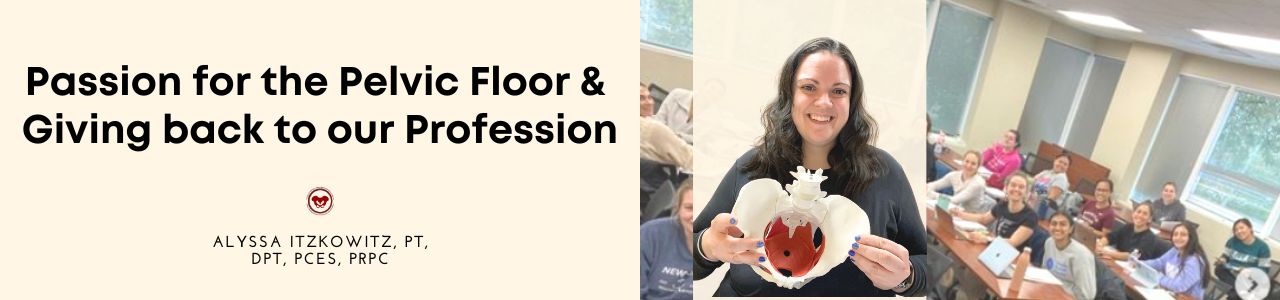

This specialty kind of fell into my lap after years of “kicking and screaming,” well, not really, just saying no a lot.
In March of 2018, I attended a continuing education course at Springfield College with a student of mine at the time (who had just completed his final clinical affiliation for split outpatient ortho and acute care in a small community hospital in Connecticut) on pelvic floor therapy. Each year I looked at the offerings for clinical instructors and nothing really excited me, but this time was different. When it was time to choose I sat down with my student and asked him what he was going to and we chose to go to the pelvic health course as he was going into outpatient orthopedics and knew he might come in contact with pregnant or postpartum patients that might need the education on pelvic health. I was excited to learn more about the pelvic floor and what that really entailed. Every time this pelvic floor physical therapist spoke about patients and the conditions she treated and how they exuded confidence going on vacation, going to an event, or even being more intimate with their partners I thought “This might be for me.” I was intrigued and excited to learn, for probably the first time, in at least 2 years.
The next day I was approached by my manager about starting a pelvic health program at our local hospital together as a team; and when I say approached, I mean there was a note on my desk that read “Please see me” and she signed her first initial. My first instinct was, “Oh no, what did I do now?” I had been skeptical for approximately 2 years as the topic came up about every other month at our staff meetings, however, without a doubt or skip in my breath I said “Sure, why not?!” At this point, I thought what do I have to lose? I was getting reimbursed to take these continuing education classes, I was getting to travel, and I was learning alongside a colleague. I went home that night and told my parents what I was going to do and they thought I was joking. My friends and boyfriend said, “You’re going to do what?” Within 1 week we were signed up for our first pelvic floor series courses through Herman & Wallace starting with Pelvic Floor 1 (now Pelvic Function 1) in Virginia Beach, VA. I began seeing patients within 3 months of taking PF1 after developing the history sheet and marketing with local OBGYN/midwife offices. Fast forward to August 2018, we took PF2A and in October 2018, I took PF2B, both in Boston, MA.
As a new pelvic floor therapist, the initial diagnoses included urinary dysfunction, prolapse, pelvic pain, and the postpartum population. Over time and taking more courses I began to treat more complex pelvic pain diagnoses. This allowed me to use more of my manual therapy skills and some more medical skills as these types of patients required an in-depth treatment approach. I took Capstone in October 2019 in Houston, TX and then we all know what happened next. After meeting patient after patient who experienced medical gaslighting, experienced pain for decades, and had run out of doctors to see, I decided to take a deeper dive into chronic and complex pelvic pain diagnoses, ie: vaginismus, vulvodynia, vestibulodynia, endometriosis, adenomyosis and so much more. I love treating each and every patient who comes through the door and into my treatment room, however, I hold a special place in my heart for those who have been told that there is no other treatment for them, or they’ve exhausted all of their outcomes. Since 2018, I haven’t met a patient I haven’t been able to help, even a little bit.
Prior to treating any pelvic floor diagnoses, I took 2-3 doctor of physical therapy (DPT) students each year, some of them shared with another acute care PT. I couldn’t fathom not taking students as I was diving into this much-needed area of physical therapy. I took my first pelvic floor-focused student in January 2020. I developed my own system as there wasn’t any standard of practice that I could find amongst other pelvic floor therapists regarding clinical education. I developed a system that taught a very basic PF1 if the student had not taken it yet that included learning the muscles, nerves, basic diagnoses, treatments, and integration into function. In order to teach a student how to do an internal vaginal assessment, I first conduct an internal assessment on the student, and then I have them perform one on me. When I tell other therapists what my structure and strategy are in order to get students ready for seeing their own caseload I always get a look of “Oh really?” and an eyebrow raise. At the end of the day, how do I know they will be competent enough to perform an internal vaginal assessment on a patient if I don’t know if their pressure is adequate or if they are palpating the correct structures?
I was starting to take more courses and follow more and more groups on social media. I always felt like an outlier as I never felt like I had to force a student who was interested in pelvic health to take PF1 unless they knew downright they wanted to go straight into pelvic health prior to starting their affiliation. They signed up for this affiliation and there is an agreement that I guide them and enhance their learning. We practice until they feel confident and competent and then choose a patient who is willing and gives consent to the student performing the internal vaginal assessment, of course with me in the room, until I feel the student is 100% independent. Since 2020 I have taken 6 DPT students who were interested in pelvic health, with another one scheduled for October 2024. I am beyond happy to say that each student has taken a job with a pelvic health focus after completing their clinical affiliation with me so I have to think I’m doing all the right things!
In January 2021, I was approached by the teaching assistant (TA) coordinator for Herman & Wallace as they were in desperate need of a TA in Danbury, CT for PF1 and I thought “What the heck? I do this day in a day out, I’d be a great TA” and jumped on that opportunity. Through my opportunities as a TA, I have been able to learn from so many amazing pelvic floor therapists all over the country, guide new therapists in their pelvic floor journey, and embark on this new journey for myself as a leader in pelvic health. I have been so lucky to have been able to TA so many courses local to my home in Connecticut over the last 3 years, which has allowed me to form professional connections and network with local to CT physical and occupational therapists, as well as the ability take over a dozen additional courses through H&W ranging from Bowel Pathology & Function to Pharmacology for the Pelvic Floor Therapist to Dry Needling without having to pay out of my own pocket. I am halfway into year 4 of my TA journey with H&W, became a lead TA in October 2023, and I truly look forward to each, and every, course I choose to TA. I love this journey I have created for myself and I am so passionate to share it with anyone and everyone willing to listen.
I am proud of the pelvic floor therapist I’ve blossomed into over the last 6 years. I honestly couldn’t have done any of this without the support of my family, boyfriend, friends, and coworkers who have listened to me talk endlessly about all of the different avenues the pelvic floor can be affected and how to begin to address those issues. My story into the pelvic health world is not like anyone else’s and that’s what makes each and every one of our journeys unique!
AUTHOR BIO
Alyssa Itzkowitz, PT, DPT, PCES, PRPC
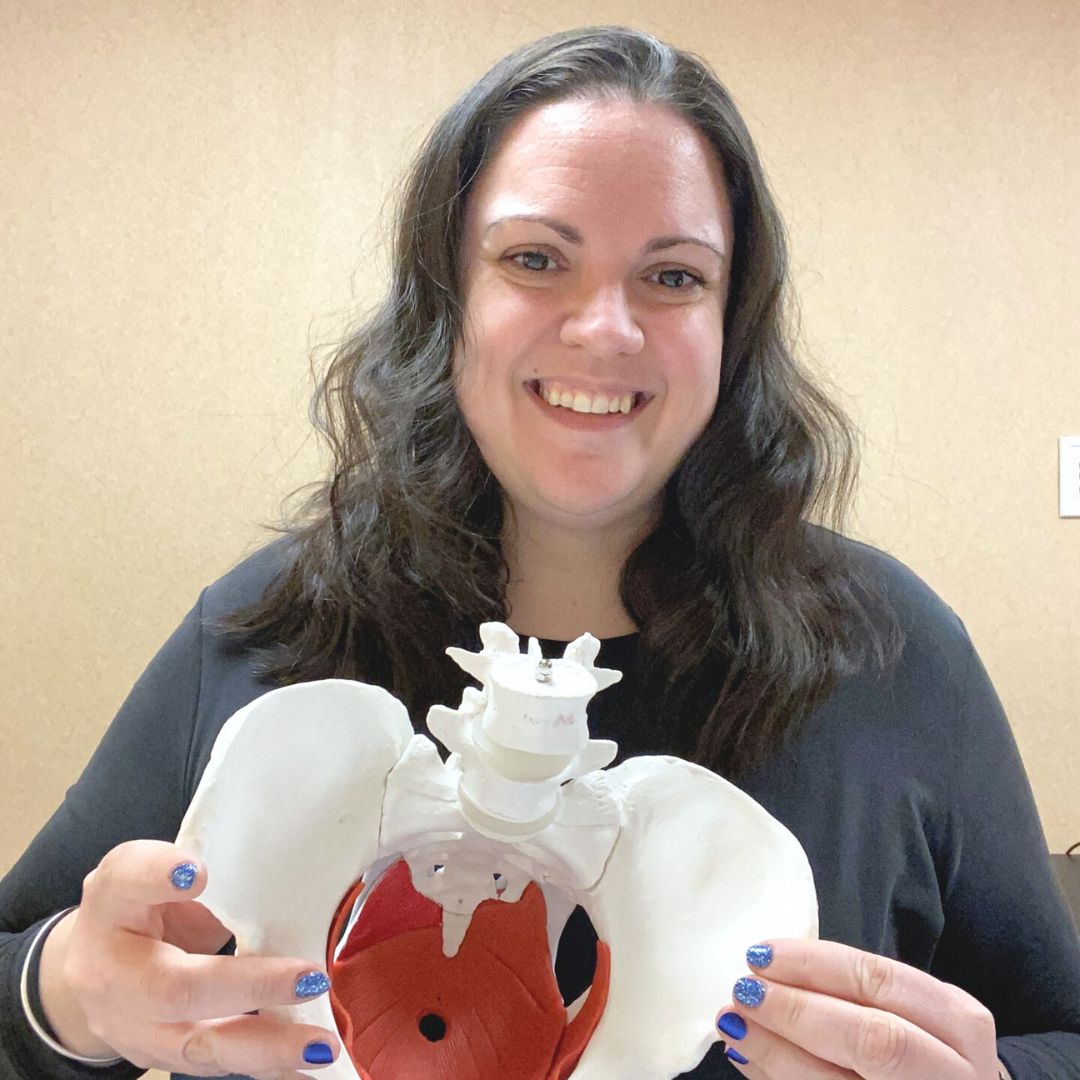 Alyssa is always taking new clients at Rockville General Hospital located in Vernon, CT. Ahe treats all genders and ages 15+ (anything younger than that is on a case-by-case basis). Evaluations are 90 minutes and follow-up treatment sessions are based on the needs of the patient and are either 30 or 60 minutes.
You can find our contact information on our hospital website: www.echn.org/services/rehabilitation or email Alyssa to discuss scheduling further: This email address is being protected from spambots. You need JavaScript enabled to view it..
All Upcoming Continuing Education Courses

Rehabilitative Ultrasound Imaging Pelvic Health Satellite Lab Course - Self-Hosted - April 17 - 19 2026
Apr 17 2026 - Apr 19 2026

Rehabilitative Ultrasound Imaging Pelvic Health Satellite Lab Course - Edmond OK - April 17 - 19 2026
Apr 17 2026 - Apr 19 2026

Pelvic Function Level 2B - Satellite - Bethpage NY - April 18 - 19 2026 - SOLD OUT
Apr 18 2026 - Apr 19 2026

Pelvic Function Level 1 - Satellite - Seattle WA - April 18 - 19 2026 - SOLD OUT
Apr 18 2026 - Apr 19 2026

Pelvic Function Level 1 - Satellite - Salt Lake City UT - April 18 - 19 2026 - SOLD OUT
Apr 18 2026 - Apr 19 2026
Pelvic Function Level 1 - Satellite - Newberg OR - April 18 - 19 2026 - SOLD OUT
Apr 18 2026 - Apr 19 2026

Menopause Transitions and Pelvic Rehab - Remote Course - April 18 - 19 2026
Apr 18 2026 - Apr 19 2026
Pelvic Function Level 1 - Satellite - Wichita KS - April 18 - 19 2026 - SOLD OUT
Apr 18 2026 - Apr 19 2026
Oncology of the Pelvic Floor Level 2A - Remote Course - April 18 - 19 2026
Apr 18 2026 - Apr 19 2026

Pelvic Function Level 1 - Satellite - St. Augustine FL - April 18 - 19 2026
Apr 18 2026 - Apr 19 2026

Pelvic Function Level 1 - Satellite - Minneapolis MN - April 18 - 19 2026 - SOLD OUT
Apr 18 2026 - Apr 19 2026



Pelvic Function Level 1 - Satellite - Colorado Springs CO - April 18 - 19 2026
Apr 18 2026 - Apr 19 2026







Pelvic Function Level 2B - Satellite - Nashotah WI - May 9 - 10 2026 - SOLD OUT
May 9 2026 - May 10 2026


Mobilization of the Myofascial Layer - Satellite Lab Course - Torrance CA - May 15 - 17 2026
May 15 2026 - May 17 2026
Mobilization of the Myofascial Layer - Satellite Lab Course Self-Hosted - May 15 - 17 2026
May 15 2026 - May 17 2026
Mobilization of the Myofascial Layer - Satellite Lab Course - McKinney TX - May 15 - 17 2026
May 15 2026 - May 17 2026
Mobilization of the Myofascial Layer - Satellite Lab Course - Bradenton FL - May 15 - 17 2026
May 15 2026 - May 17 2026

Mobilization of the Myofascial Layer - Satellite Lab Course - Atlanta GA - May 15 - 17 2026
May 15 2026 - May 17 2026

Pediatrics Level 2 - Adv Pediatric Bowel and Bladder Disorders - Remote Course - May 16 - 17 2026
May 16 2026 - May 17 2026
Pelvic Function Level 1 - In-Person - Bridgewater NJ - May 16 - 17 2026 - SOLD OUT
May 16 2026 - May 17 2026