
Rethinking the Menstrual Experience in Pelvic Rehab A look at Menstruation and Pelvic Health, with Nicholas Gaffga, MD, MPH, FAAFP and Amy Meehan, PT, DPT, MTC

Rethinking the Menstrual Experience in Pelvic Rehab
A look at Menstruation and Pelvic Health, with Nicholas Gaffga, MD, MPH, FAAFP and Amy Meehan, PT, DPT, MTC

HW Menstruation Blog Header

Half the world's population experiences a menstrual cycle, yet social stigma, clinical discomfort, and gaps in provider training often leave patients without the information, tools, or permission they need to manage it well. Pelvic rehab clinicians frequently find themselves on the receiving end of questions no one else has been willing to answer. What is a normal period? Why does my cycle affect my pelvic floor symptoms so much? What products actually work, and how do I choose the right one? Is this amount of pain something I should just live with?

These are the questions Nicholas Gaffga, MD, MPH, FAAFP and Amy Meehan, PT, DPT, MTC set out to address when they built the Herman & Wallace remote course Menstruation and Pelvic Health. The course is designed for pelvic rehab providers who want to go beyond treating isolated symptoms and instead help patients reshape the menstrual experience itself through non-hormonal, non-prescription, and non-surgical interventions.

What the Course Covers

The curriculum is organized into four parts. Part 1, Cultural Aspects of the Menstrual Experience, examines how historical and cultural narratives shape the way menstruation is discussed, clinically managed, and personally experienced. Part 2, Menstrual Structures and Processes, covers the hormones, anatomy, and physiology of the cycle, including the HPO axis and the organs involved in preparing the uterus throughout each phase. Part 3, Menstrual Symptoms and Disorders, addresses dysmenorrhea, heavy bleeding, off-cycle spotting, emotional concerns, and vaginal discharge, along with common disorders including premenstrual disorders, endometriosis, adenomyosis, PCOS, and fibroids. Part 4, Menstrual Interventions, focuses on holistic strategies clinicians can introduce in practice today.

The second edition of the course includes new interviews with expert pelvic floor practitioners Ramona Horton, Jenna Ross, and Beth Kemper, whose clinical experience adds depth to the discussion of how the menstrual cycle intersects with pelvic floor dysfunction across the lifespan. Provocative topics run throughout, including chronobiology, interoception, menstrual mindfulness, menstrual molimina, cultural milestones, prostaglandins and period symptoms, and what a normal period actually looks like.

Why It Matters for Pelvic Rehab

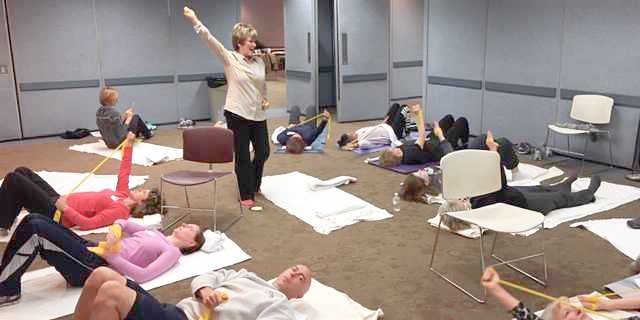
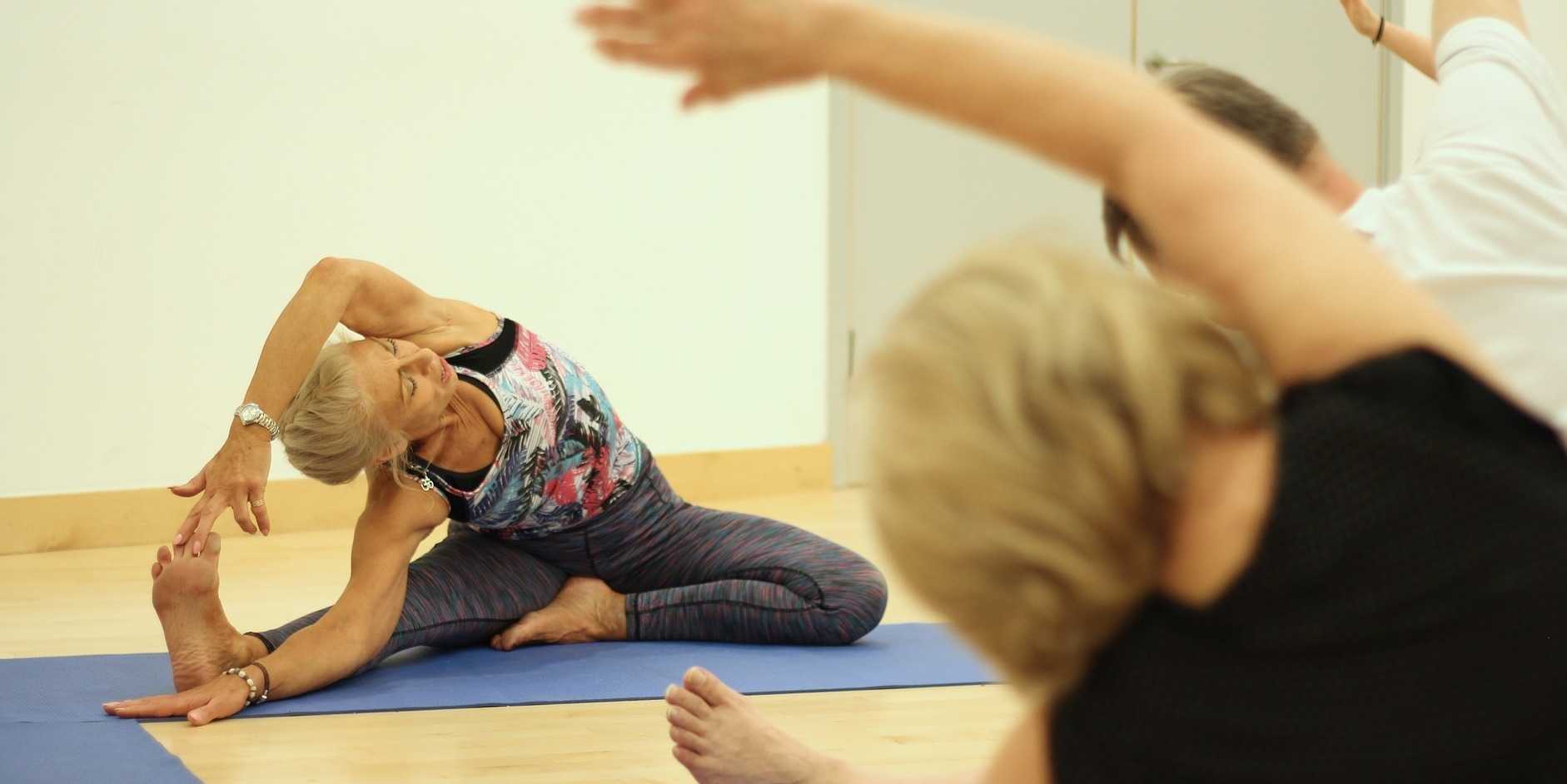
In the live remote session, Dr. Meehan demonstrates yoga and stretch poses tailored to different phases of the cycle, along with a detailed walkthrough of menstrual products from liners and tampons to cups, discs, period underwear, overnightwear, activewear, and swimwear. Participants learn to build a flow management plan with patients, identify when to refer for physician evaluation, and help patients develop an individual action plan to reduce negative symptoms and work with the natural rhythms of their cycle.

Past participants describe the course as one that changes how they practice. Clinicians leave with a deeper understanding of their patients' experience, a broader set of tools to offer in the clinic, and language that makes a historically taboo topic feel approachable in the treatment room.

Upcoming Dates

The next live remote session of Menstruation and Pelvic Health is May 9, 2026. Additional dates are offered throughout the year for clinicians who want to schedule the course alongside their summer and fall continuing education plans.

Register for the Course

Menstruation and Pelvic Health

Next Session: May 9, 2026

Remote Course via Zoom

Additional dates available throughout 2026

Register here: https://hermanwallace.com/continuing-education-courses/menstruation-and-pelvic-health

Continue reading

The Evidence Behind Shockwave Therapy in Pelvic Rehab: Faculty Spotlight on Stacey Roberts, PT, RN, MSN

The Evidence Behind Shockwave Therapy in Pelvic Rehab:
Faculty Spotlight on Stacey Roberts, PT, RN, MSN

HW Stacey Blog Header


Few modalities have generated as much clinical conversation in the last five years as low-intensity extracorporeal shockwave therapy. Once reserved for kidney stones and elite sports medicine clinics, shockwave has now crossed into pelvic health, with growing applications for chronic pelvic pain, erectile dysfunction, genitourinary syndrome of menopause, and stress urinary incontinence. For clinicians considering whether to add this tool to their practice, the first question is always the same. Does the research support what the marketing claims?

Stacey Roberts, PT, RN, MSN has built her teaching career around answering that question with rigor. Her Herman & Wallace remote course, Shockwave Treatment, gives pelvic rehab clinicians a clear-eyed look at the evidence, the device landscape, and the clinical protocols that actually work.

Why the Research Matters

The evidence base for shockwave therapy in pelvic health is deeper than many clinicians realize, and it is growing quickly. Three studies in particular have shaped the conversation.

First, the landmark randomized, double-blind, placebo-controlled trial by Zimmermann and colleagues, published in European Urology in 2009, established shockwave as a viable treatment for male chronic pelvic pain syndrome.1 Men who received four weekly sessions of perineal shockwave showed statistically significant improvements in pain, quality of life, and urinary symptoms compared to sham controls, with effects sustained at twelve weeks. This study is still cited today as the foundational clinical trial for shockwave in the pelvis.

Second, a 2021 systematic review and meta-analysis by Zeng and Ye in Translational Andrology and Urology pooled data from six controlled trials covering more than three hundred patients with chronic pelvic pain syndrome.2 The analysis confirmed that low-intensity extracorporeal shockwave therapy produced meaningful improvements in total National Institutes of Health Chronic Prostatitis Symptom Index scores, pain subscores, urinary function, and quality of life at twelve weeks post-treatment. The authors concluded that shockwave has a reproducible clinical effect and warrants continued investigation as a first-line conservative intervention.

Third, a 2022 randomized, double-blind, placebo-controlled study by Kim and colleagues in the World Journal of Men's Health applied multi-focal low-intensity shockwave weekly for eight weeks in men with category III chronic prostatitis.3 The treatment group showed significant improvements in symptom index scores, erectile function, and pain compared to placebo, with no reported adverse events. This study helped establish that the benefits extend beyond pain relief into sexual function, which has important implications for patients dealing with post-prostatectomy concerns, pelvic floor hypertonicity, and partner intimacy issues.

Taken together, these studies move shockwave from anecdote to evidence. They also raise the bar for clinical application. As Stacey emphasizes in her course, not all devices produce true shockwaves, not all protocols deliver equivalent doses, and not all patients are appropriate candidates.

What Sets This Course Apart

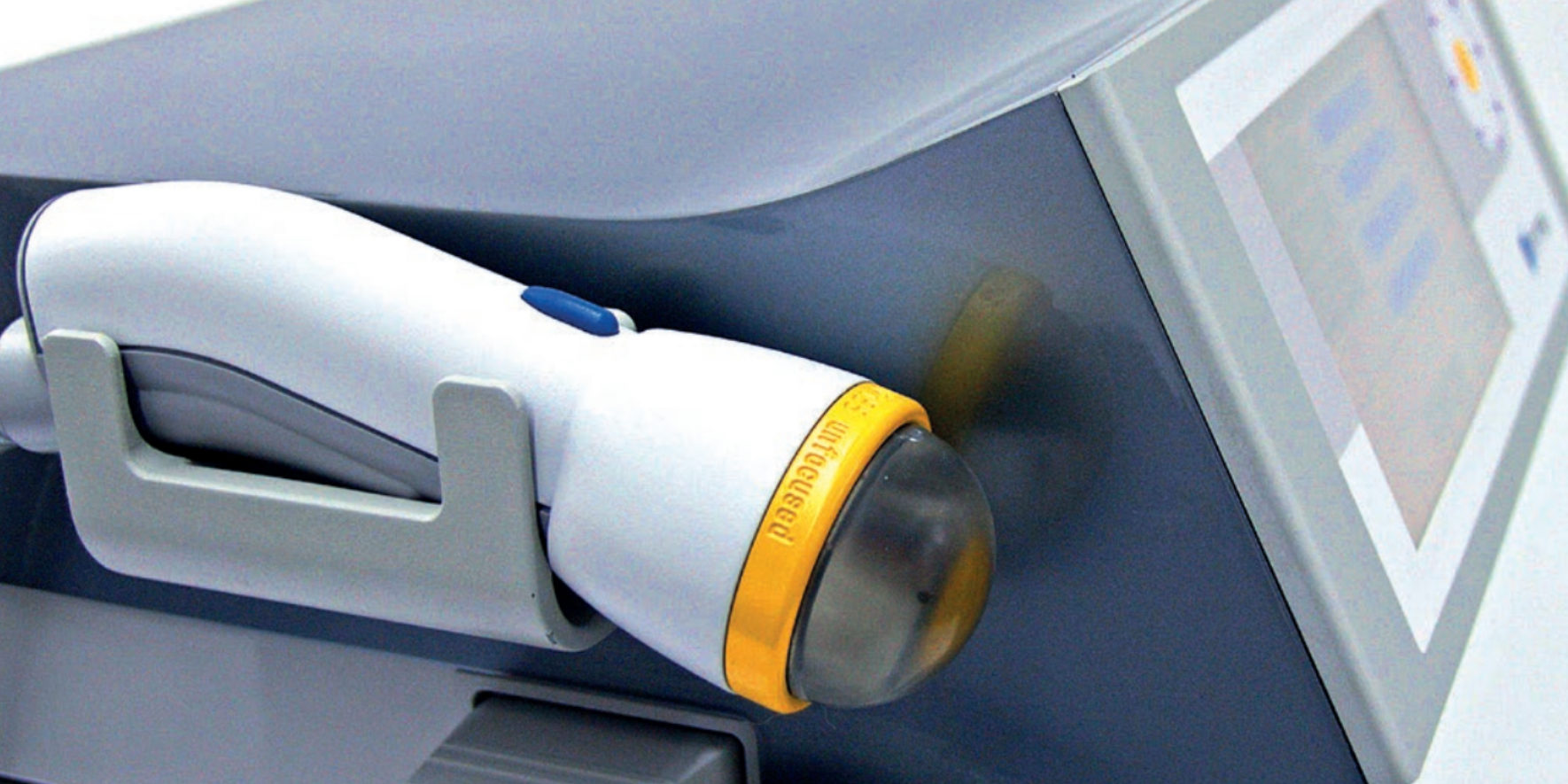
Where shockwave marketing tends to oversimplify, the Herman & Wallace course focuses on precision. Stacey walks participants through the physics of focused versus radial devices, the differences between electrohydraulic, electromagnetic, and piezoelectric shockwave generation, and how each influences tissue depth and clinical indication. She unpacks the research terminology so clinicians can read a study and immediately know whether the device tested was a true shockwave or a radial pressure wave, a distinction that matters enormously when translating findings to clinical practice.

The course also covers case studies, treatment protocols for common pelvic health indications, and practical business considerations for clinicians weighing whether to invest in a device for their practice.

About Stacey Roberts

Stacey Roberts, PT, RN, MSN has been a physical therapist specializing in outpatient orthopedics and sports medicine since 1990. She has been analyzing shockwave research extensively since 2020 to develop clear and concise therapeutic applications and protocols for pelvic health, sexual health, and musculoskeletal patients. Stacey is the owner of New You Health and Wellness, a cash-based clinic where she integrates wellness, hormone health, and musculoskeletal care. She is a co-principal investigator on an IRB-approved study related to shockwave and dyspareunia, and she joined the Herman & Wallace faculty in 2021.

Learn From Stacey Roberts

Shockwave Treatment: Therapeutic Interventions in Pelvic Health & Demystifying the Research

May 3, 2026

Remote Course via Zoom

Register here: https://hermanwallace.com/continuing-education-courses/shockwave-treatment/remote-course-may-3-2026

References

  1. Zimmermann R, Cumpanas A, Miclea F, Janetschek G. Extracorporeal shock wave therapy for the treatment of chronic pelvic pain syndrome in males: a randomised, double-blind, placebo-controlled study. Eur Urol. 2009;56(3):418-424. doi:10.1016/j.eururo.2009.03.043
  2. Zeng X, Ye Z. Low-intensity extracorporeal shock wave therapy for male chronic pelvic pain syndrome: a systematic review and meta-analysis. Transl Androl Urol. 2021;10(4):1543-1556. doi:10.21037/tau-20-1423
  3. Kim KS, Choi YS, Bae WJ, et al. Clinical efficacy of multi-focal low-intensity extracorporeal shockwave therapy in the treatment of chronic prostatitis/chronic pelvic pain syndrome: prospective-randomized, double-blind, placebo-controlled study. World J Mens Health. 2022;40(2):298-305. doi:10.5534/wjmh.210078
  4. Vahdatpour B, Alizadeh F, Moayednia A, Emadi M, Khorami MH, Haghdani S. Efficacy of extracorporeal shock wave therapy for the treatment of chronic pelvic pain syndrome: a randomized, controlled trial. ISRN Urol. 2013;2013:972601. doi:10.1155/2013/972601
  5. Marszalek M, Berger I, Madersbacher S. Low-energy extracorporeal shock wave therapy for chronic pelvic pain syndrome: finally, the magic bullet? Eur Urol. 2009;56(3):425-426. doi:10.1016/j.eururo.2009.06.026
Continue reading

Herman & Wallace Faculty Member Rachna Mehta Publishes Case Report on Conservative Management of Rectal Prolapse

Herman & Wallace Faculty Member Rachna Mehta Publishes Case Report on Conservative Management of Rectal Prolapse

Opt1

A new peer-reviewed publication in the Journal of Women’s & Pelvic Health Physical Therapy expands the evidence base for non-surgical, patient-centered care.

By Rachna Mehta, PT, DPT, CIMT, OCS, PRPC, RYT 200

Herman & Wallace Faculty Member  

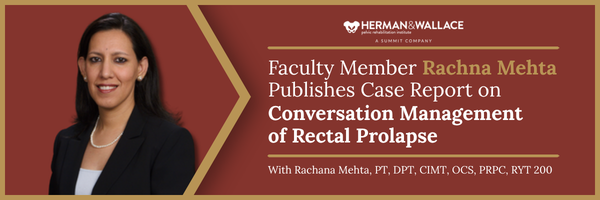
We are thrilled to share exciting news from Herman & Wallace faculty member Rachna Mehta, PT, DPT, CIMT, OCS, PRPC, RYT 200. Rachna has co-authored a new case report published in the Journal of Women’s & Pelvic Health Physical Therapy, alongside her colleague Becky Parr, PT, DPT, DHSc, OCS, Cert. DN, CAPP-OB.

NEW PUBLICATION

Conservative Management of Rectal Prolapse: An Integrative Physical Therapy Approach

Rachna Mehta, PT, DPT, CIMT, OCS, PRPC, RYT 200 & Becky Parr, PT, DPT, DHSc, OCS, Cert. DN, CAPP-OB

Journal of Women’s & Pelvic Health Physical Therapy, January 2026

Read the Publication →

This case report highlights a conservative, integrative physical therapy approach to managing rectal prolapse using acupressure combined with traditional pelvic floor rehabilitation. Severe rectal prolapse is a condition frequently viewed as primarily surgical in nature, often leaving older adults or those who are not ideal surgical candidates with limited options.

“This work helps expand the evidence for non-surgical, patient-centered options, particularly for older adults or those who are not ideal surgical candidates.”

— Rachna Mehta

By documenting this integrative case, Rachna and her co-author have contributed meaningfully to the growing body of evidence supporting complementary and conservative approaches within pelvic health physical therapy. This publication reflects the kind of whole-person, evidence-informed care that Rachna has championed throughout her career.

This publication is a natural extension of Rachna’s clinical expertise and her ongoing work bridging Traditional Chinese Medicine principles including acupressure and meridian theory with contemporary pelvic floor rehabilitation. Her Herman & Wallace course, Acupressure for Optimal Pelvic Health, has introduced countless clinicians to this integrative framework.

About the Author

Rachna Mehta, PT, DPT, CIMT, OCS, PRPC, RYT 200

Herman & Wallace Faculty Member  ·  Columbia University, DPT  ·  Board-Certified in Orthopedics  ·  Certified Pelvic Rehab Practitioner  ·  Registered Yoga Teacher

Rachna graduated from Columbia University with her Doctor of Physical Therapy degree and has spent over 15 years practicing in outpatient hospital and private practice settings with a dual focus on orthopedics and pelvic health. She was instrumental in founding one of the first Women’s Health Programs in an outpatient orthopedic clinic setting in Mercer County, New Jersey in 2009. Rachna also owns TeachPhysio, a PT education and management consulting company. Her clinical approach blends traditional physical therapy with holistic practices that address the whole person physically, mentally, emotionally, and spiritually.

Learn from Rachna

Explore Rachna’s course Acupressure for Optimal Pelvic Health and bring integrative acupressure into your pelvic health practice.

View Rachna’s Courses at Herman & Wallace →


Continue reading

All Upcoming Continuing Education Courses