


Pelvic organ prolapse (POP) and stress urinary incontinence (SUI) are common conditions affecting people with a vagina across the lifespan, often leading to significant impairments in quality of life. Conservative management is increasingly prioritized, particularly among those who are not surgical candidates, wish to delay surgery, or are managing symptoms during pregnancy or postpartum recovery. Pessaries, intravaginal devices used to support the pelvic organs or compress the urethra, represent a cornerstone of conservative pelvic health management. Their safe, relatively non-invasive nature and growing evidence base make them essential tools in a clinician’s pelvic health toolkit. Pessaries are considered relatively safe for many patient populations and are well tolerated when a proper fit is achieved (Rogers 2017). Well fit pessaries are expected to allow people with POP to participate in a full range of physical activities and exercise comfortably (O’Dell 2012).
This essay explores the current evidence on pessary use, including types, indications, contraindications, patient selection, fitting considerations, and integration with pelvic therapy. Emphasis is placed on empowering pelvic health providers to incorporate pessaries confidently and collaboratively in clinical practice.
Clinical Indications
 Pessaries can be used for a range of pelvic health conditions, including:
- Pelvic organ prolapse (POP), this includes management of symptomatic cystocele, rectocele, uterine prolapse, or vault prolapse.
- Stress urinary incontinence (SUI): Especially in cases where the patient is participating in pelvic therapy and making gains in pelvic floor function but continues to have symptoms during lifting or during high-impact activities.
- Pregnancy-related prolapse or urinary symptoms: Providing support during gestation. This is prescribed by a birth provider including an MD, NP, or CNM.
- Postpartum recovery: For temporary support during tissue remodeling.
Types of Pessaries and Their Functions
 Pessaries are broadly categorized into supportive and space-filling devices. The selection of type depends on the specific condition being treated, the degree of prolapse, and the patient’s anatomy and functional goals.
- Support Pessaries
These include the ring pessary (with or without support) and are generally used for mild to moderate prolapse or stress urinary incontinence. Ring with support is frequently used in patients with a widened introitus some apical loss of support (either the cervix or the cuff in the event of hysterectomy). Ring without support can be a good choice for patients with mild to moderate cystocele and/or rectocele with generally good pelvic floor muscle tone.
- Space-Filling Pessaries
Designed for more advanced prolapse or when support pessaries fail, these include Gellhorn, Donut, and Cube pessaries. The Gellhorn is often used in cases of more severe prolapse (stage III or IV prolapse). For stress urinary incontinence, the incontinence dish or ring with knob can elevate the urethra and reduce leakage under load of the knob.
Contraindications and Cautions
Although pessaries are safe, contraindications and red flags must be observed. They include:
- Active vaginal infections (e.g., candidiasis or bacterial vaginosis) should be treated prior to fitting.
- Severe vaginal atrophy may increase the risk of erosion and should be managed with topical estrogen before long-term use.
- Noncompliance with prior use and cleaning, or cognitive impairment may limit self-care ability unless caregivers are trained.
- Allergy to pessary material (e.g., latex, silicone), though rare, must be considered.
Fitting Process: A Collaborative and Individualized Approach
 Proper fitting is essential for comfort, function, and adherence. The process typically includes a pelvic exam to assess prolapse stage, vaginal length, introital laxity, and tissue integrity. Additionally, trial and error during fitting with a range of pessary sizes and types is common. The right pessary should sit comfortably behind the pubic symphysis and under the cervix or vaginal vault without protruding or causing discomfort.
Functional testing during the fitting process is helpful to ensure comfort and optimal use for the patient. To do this, ask the patient to stand, bear down, cough, and walk around the office to ensure stability and effectiveness.
Patient education: On insertion, removal, cleaning, and signs of complications.
Follow-up after a pessary is fit is usually done after 1–2 weeks, then at 3-month intervals depending on patient autonomy and tissue health. Patients should also be instructed in managing complications and problem solving. Most pessary complications are minor and manageable, including:
- Increased vaginal discharge
- Odor or irritation
- Light bleeding or spotting, especially in estrogen-deficient tissues
- Expulsion or shifting of the pessary
- Urinary retention (rare, more common with space-filling devices)
Management strategies:
- Encourage regular removal and cleaning (daily to weekly for self-managing patients; every 1–3 months for clinician-managed).
- Use vaginal estrogen for tissue health in postmenopausal patients.
- Resize or switch device types if discomfort or expulsion occurs.
- Refer for evaluation to a physician or nurse practitioner if persistent bleeding, pain, or infection is noted.
Patient Empowerment and Adherence
Patient-centered education improves long-term success with a pessary. Education that pessaries are not permanent and can be removed at any time often alleviates anxiety that they may be feeling. Additionally, pessaries do not stretch or weaken the vagina; in fact, they often support pelvic rehabilitation efforts in conjunction with pelvic health therapy. Additionally, self-care is safe and achievable with practice and symptom relief can be immediate, as the patient works on restoring mobility, confidence, and function. Offering video tutorials, printed guides, and in-person instruction increases adherence and reduces fear or confusion.
Conclusion
Pessaries are a powerful, evidence-based tool for managing pelvic organ prolapse and stress urinary incontinence. When thoughtfully integrated into a multidisciplinary pelvic health plan, they provide a non-invasive, low-risk option that empowers patients while supporting tissue healing and function. Pelvic health providers play a crucial role in identifying appropriate candidates, facilitating fittings, and supporting ongoing care, especially when combined with targeted physical therapy. Understanding the nuances of pessary selection, education, and monitoring will continue to elevate care standards and improve outcomes in this essential area of women’s health.
References:
- O’Dell K, Atnip S. (2012). Pessary Care: Follow Up and Management of Complications. Urologic Nursing.32 (3), 126-145.
- Rogers, R. G., & Fashokun, T. B. (2017). Pelvic organ prolapse in women: Epidemiology, risk factors, clinical manifestations, and management. Waltham, MA: Wolters Kluwer.
AUTHOR BIO
Dr. Amanda Olson
 Dr. Amanda Olson is a pelvic health physical therapist, entrepreneur, author, and global educator with a passion for empowering men and women and advancing conversations around pelvic health. She has dedicated her career to breaking stigmas around pelvic health, supporting patients with conditions including cancer, incontinence, pelvic pain, cancer, pelvic organ prolapse, endometriosis, and MRKH, and developing innovative solutions to improve quality of life.
Dr. Olson is the president of Intimate Rose, a successful pelvic health device company that includes tools for managing pelvic pain, holds multiple patents, and has authored six peer-reviewed journal articles as well as the book Restoring the Pelvic Floor for Women. She is also the recipient of the Elizabeth Nobel Award, the highest honor bestowed in the field of pelvic health. She has collaborated with clinics worldwide, transforming lives through her tools, teaching, and consulting. As an advocate for patients with sensitive issues, and medical innovation, Dr. Olson is committed to bridging the gap in pelvic and women’s healthcare and bringing education to underserved patient populations.
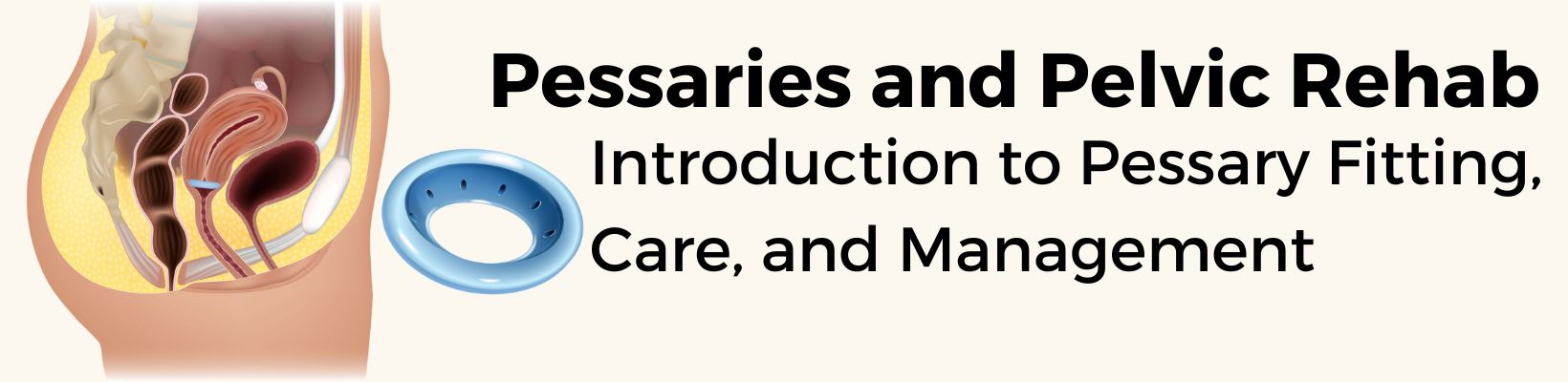

A pessary is a device that is placed in the vaginal canal to support the pelvic organs. They can be worn only during an activity that typically provokes symptoms, such as running, or used almost continuously with periodic cleaning. People looking to avoid or delay pelvic organ prolapse surgery, such as those planning to give birth, may especially benefit from pessary use. Many transgender and nonbinary people with a front canal also find pessary use helpful for reducing POP symptoms.
Pessaries have additional benefits beyond improving prolapse symptoms. For example, some pessaries are designed to mitigate urinary incontinence by applying pressure to the urethra (1). A 2024 study even indicated that they may improve sexual wellness in people with pelvic organ prolapse (2). One case study series suggests that intersex people who have undergone vaginoplasty or neovaginoplasty may also benefit from pessary use for maintaining the patency of the canal (5).
Traditionally in the United States, pessaries have been placed by medical professionals rather than rehabilitation professionals (although some PTs at the Veterans Affairs were involved in fitting pessaries under the guidance of urogynecologists). In 2021, the American Physical Therapy Association’s Academy of Pelvic Health convened a Pessary Task Force to look at the feasibility of physical therapists fitting and managing pessaries. In 2022, the Academy of Pelvic Health released its position statement to include pessary fitting and management in the scope of practice of pelvic health physical therapists in the United States and its five territories. By the end of 2022, the Academy of Pelvic Health hosted its first pessary fitting course. Several more courses have been offered since then. Physical therapists specialize in showing clients how to tend to and support their bodies. Active participation in pessary fitting and management is a way to help the nearly 40% of people with vaginal canals who are expected to develop pelvic organ prolapse.
If you would like to learn more, Herman & Wallace now has a pessary course! Pessaries and Pelvic Rehab is a two-day in-person course designed for pelvic therapists interested in adding pessary fitting to their clinical practice and have completed Pelvic Function Level 1 and Level 2B. Pessaries and Pelvic Rehab is scheduled for Chicago, IL on November 8-9, 2025. We look forward to seeing you there!
Note: HW does not currently know of any occupational therapists fitting pessaries in the United States, but they hope that this becomes a part of OT scope in the future.
References
- Shah SM, Sultan AH, Thakar R. The history and evolution of pessaries for pelvic organ prolapse. Int Urogynecol J Pelvic Floor Dysfunct. 2006;17(2):170-175.
- Jin C, Yan H, Shang Y, et al. Real-world clinical effectiveness of nonsurgical treatments for female with POP-Q stage II cystocele: a retrospective analysis of therapeutic efficacy. Transl Androl Urol. 2024;13(4):483-492.
- Petter Rodrigues M, Bérubé MÈ, Charette M, McLean L. Conservative interventions for female exercise-induced urinary incontinence: a systematic review. BJU Int. Published online July 23, 2024.
- Nemeth Z, Vida P, Markovic P, Gubas P, Kovacs K, Farkas B. Long-term self-management of vaginal cube pessaries can improve sexual life in patients with pelvic organ prolapse, results from a secondary analysis. Int Urogynecol J. Published online August 5, 2024.
- Mensah V, Christianson MS, Yates M, Tobler K, Kolp LA. Novel use of a pessary to maintain vaginal patency following vaginoplasty or neovaginoplasty for mullerian anomalies or agenesis. Fertility and Sterility. 2013;99(3):S37.
- Wang B, Chen Y, Zhu X, et al. Global burden and trends of pelvic organ prolapse associated with aging women: An observational trend study from 1990 to 2019. Front Public Health. 2022;10:975829.
All Upcoming Continuing Education Courses

Menopause Transitions and Pelvic Rehab - Remote Course - January 17 - 18 2026
Jan 17 2026 - Jan 18 2026

Pelvic Function Level 1 - Satellite - Bethpage NY - January 24 - 25 2026- SOLD OUT
Jan 24 2026 - Jan 25 2026

Pelvic Function Level 2B - Satellite - Port St. Lucie FL - January 24 - 25 2026
Jan 24 2026 - Jan 25 2026

Pelvic Function Level 1 - Satellite - Woodbury NY - January 24 - 25 2026 - SOLD OUT
Jan 24 2026 - Jan 25 2026

Pelvic Function Level 2B - Satellite - Indianapolis IN - January 24 - 25 2026 - SOLD OUT
Jan 24 2026 - Jan 25 2026


Pelvic Function Level 2B - Satellite - St. Augustine FL - January 24 - 25 2026
Jan 24 2026 - Jan 25 2026


Pelvic Function Level 1 - Satellite - Bradenton FL - January 24 - 25 2026 - SOLD OUT
Jan 24 2026 - Jan 25 2026

Pelvic Function Level 1 - Satellite - New York NY - January 24 - 25 2026 - SOLD OUT
Jan 24 2026 - Jan 25 2026

Pelvic Function Level 1 - Satellite - Los Angeles CA - January 24 - 25 2026 - SOLD OUT
Jan 24 2026 - Jan 25 2026




Pelvic Function Level 1 - In-Person - Columbus OH - January 31 - February 1 2026
Jan 31 2026 - Feb 1 2026

Pelvic Function Level 2C - Satellite - Boston MA - January 31 - February 1 2026
Jan 31 2026 - Feb 1 2026

Pelvic Function Level 2C - Satellite - Omaha NE - January 31 - February 1 2026
Jan 31 2026 - Feb 1 2026


Pelvic Function Level 1 - Satellite - Fairfax VA - February 7 - 8 2026 - SOLD OUT
Feb 7 2026 - Feb 8 2026

Pelvic Function Level 1 - Satellite - Queens NY - February 7 - 8 2026 - SOLD OUT
Feb 7 2026 - Feb 8 2026




Pelvic Function Level 1 - Satellite - Greenwich Village NY - February 7 - 8 2026 - SOLD OUT
Feb 7 2026 - Feb 8 2026



Pelvic Function Level 2B - Satellite - Seattle WA - February 14 - 15 2026 - SOLD OUT
Feb 14 2026 - Feb 15 2026

Pelvic Function Level 2B - Satellite - Galloway NJ - February 14 - 15 2026
Feb 14 2026 - Feb 15 2026

Pelvic Function Level 2B - Satellite - Owensboro KY - February 14 - 15 2026
Feb 14 2026 - Feb 15 2026

Mobilization of Visceral Fascia: Urinary - Satellite Lab Course - Torrance CA - February 20 - 22 2026
Feb 20 2026 - Feb 22 2026

Mobilization of Visceral Fascia: The Urinary System Satellite Lab Course - Self-Hosted - February 20 - 22 2026
Feb 20 2026 - Feb 22 2026

Mobilization of Visceral Fascia: Urinary - Satellite Lab Course - Lake Stevens WA - February 20 - 22 2026
Feb 20 2026 - Feb 22 2026

Mobilization of Visceral Fascia: Urinary - Satellite Lab Course - Medford OR - February 20 - 22 2026
Feb 20 2026 - Feb 22 2026


Pelvic Function Level 1 - Satellite - Nashville TN - February 21 - 22 2026
Feb 21 2026 - Feb 22 2026
Pain Science for the Chronic Pelvic Pain Population - Remote Course - February 21 - 22 2026
Feb 21 2026 - Feb 22 2026